
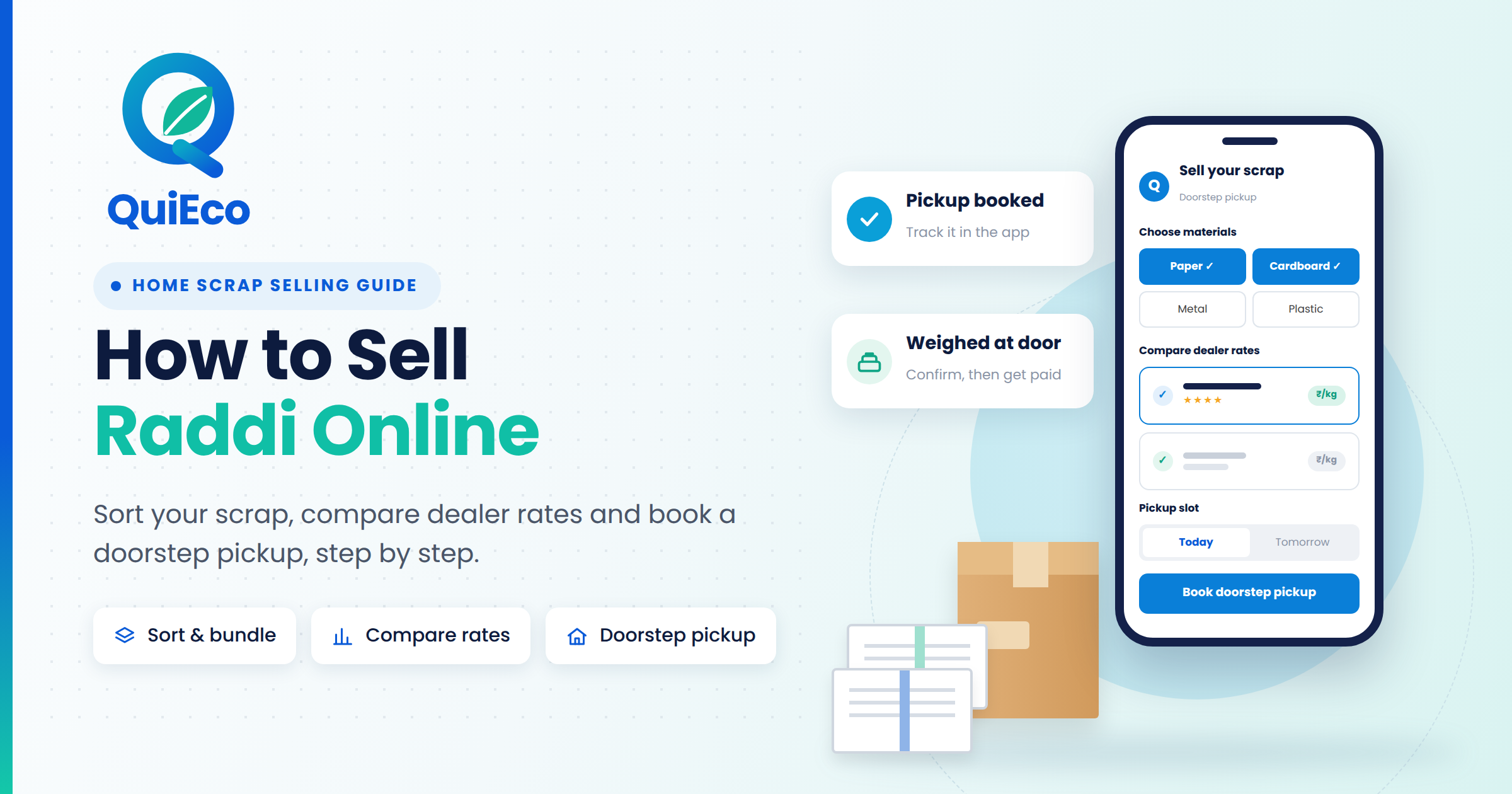
Old newspapers pile up in a corner, cardboard boxes from online orders fill the balcony, and a broken cooler or a few iron rods sit in the storeroom for months. In most Indian homes, scrap builds up quietly until it becomes a real space problem. If you want to sell raddi online instead of waiting for a kabadiwala to pass by your street, the process is simpler than most people expect.
Selling online lets you see which dealers buy your materials, compare the rates they offer and book a doorstep pickup at a time that suits you. This guide explains what raddi is, how to prepare it, how to find a reliable buyer, what affects the price you get and how to complete the sale with confidence.
What Is Raddi and What Types of Scrap Can You Sell?
Raddi is the common Indian term for waste paper sold for recycling, mainly old newspapers, magazines and books. In everyday use, people often say “raddi” for all household scrap, including cardboard, plastic and metal.
Most scrap dealers buy these common categories:
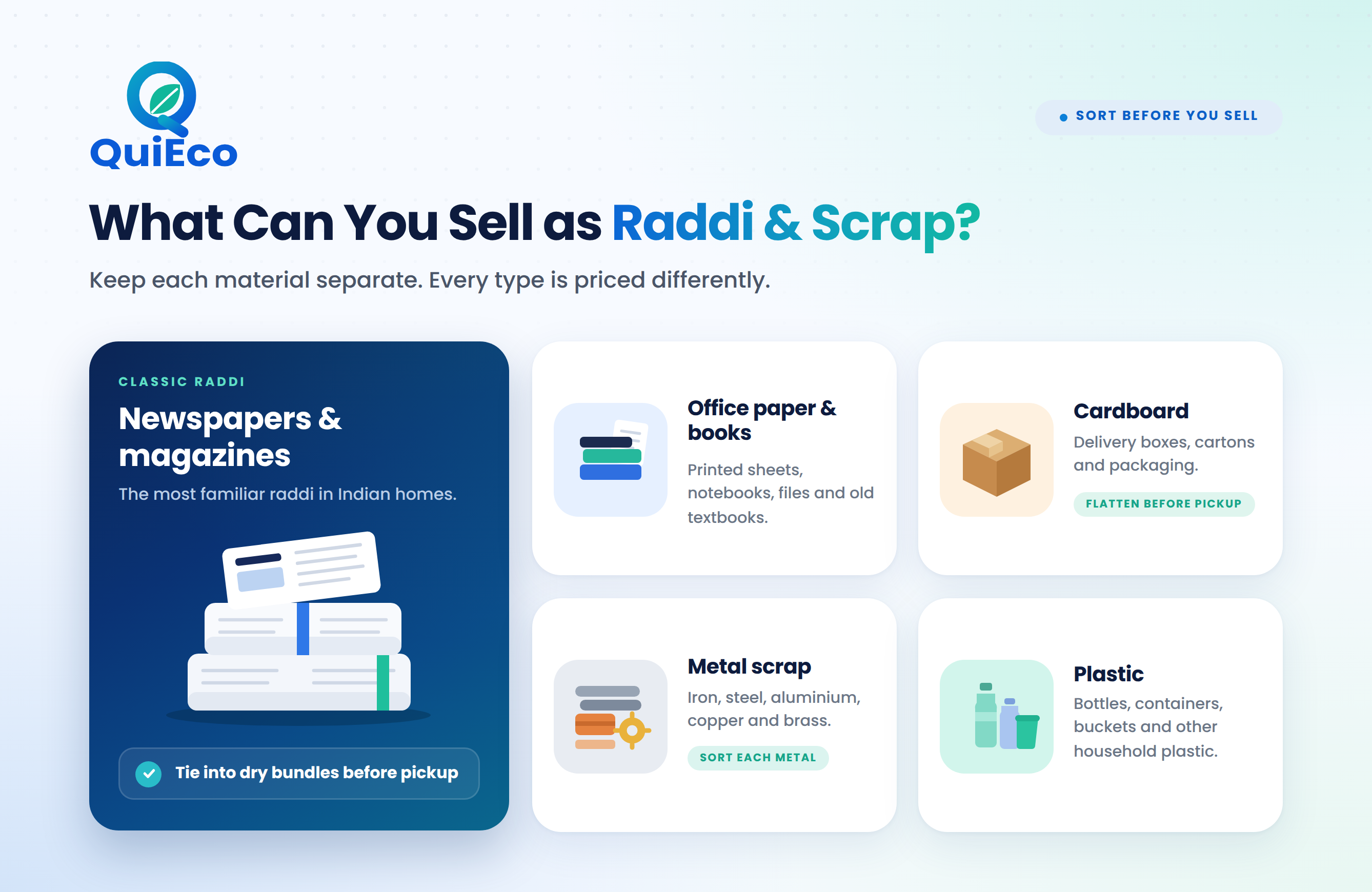
- Newspapers and magazines: The most familiar form of raddi in Indian homes.
- Office paper and old books: Printed sheets, notebooks, files and used textbooks.
- Cardboard: Delivery boxes, cartons and packaging.
- Metal scrap: Iron, steel, aluminium, copper and brass, such as old utensils, pipes, rods and fittings.
- Plastic: Bottles, containers, buckets and other household plastic items.
Some dealers also accept old appliances, electronic items or furniture, but this varies. Always check what a dealer accepts before you book.
Separating these materials matters because each one is priced differently. A dealer pays one rate for newspaper, another for cardboard and a much higher rate for copper or brass. When everything is mixed together, weighing takes longer and the dealer may offer a lower rate for the whole lot.
Why Sell Raddi and Scrap Online Instead of Using Traditional Methods?
The traditional method is simple: wait for a kabadiwala to pass by, call out, agree on a rate at the door and sell. It works, but it has gaps. You may not know whether the rate is fair, the buyer may not come when you need them, and larger loads are hard to arrange.
When you sell raddi online, you avoid several of these problems:
- Convenience: You can book a pickup from your phone instead of waiting for someone to pass by.
- Easier buyer discovery: You can see dealers who serve your area, even if you have never met them.
- Rate comparison: Where a platform shows dealer rates, you can compare them before you choose.
- Organised pickup: You choose a time slot, and the pickup has a clear booking record.
- Responsible recycling: Your paper, metal and plastic reach dealers who pass them on to the recycling chain instead of a landfill.
Online selling does not guarantee a higher price in every case. Rates still depend on the dealer, the material and the area. What it gives you is more information and more control before you agree to a sale.
How to Sell Raddi Online from Home: Step-by-Step
To sell raddi online, sort your scrap by material, compare dealer rates, book a doorstep pickup and confirm the weight and amount before you accept payment. The exact process depends on the platform, dealer and location, but these eight steps apply in most cases.
1. Identify and Collect the Scrap You Want to Sell
Walk through your home and gather everything you no longer need: old newspapers, cartons, used notebooks, broken metal items and plastic containers. Check storerooms, lofts, balconies and kitchen cabinets, where scrap tends to collect.
2. Sort and Separate Materials by Type
Make separate piles or bags for paper, cardboard, each type of metal and plastic. Keep copper and brass apart from iron, because they are priced very differently. Remove items that are not scrap, such as cloth or food waste, from the paper pile.
3. Keep Materials Clean, Dry and Safely Organised
Wet or soiled paper is harder to recycle and may fetch a lower rate. Store newspapers and cardboard in a dry place and tie them into bundles. Flatten cardboard boxes so they take less space and are easier to weigh. Keep sharp metal pieces away from children and wrap them before the pickup.
4. Check Available Scrap Rates and Compare Offers
Before you sell raddi online, look up the rates that dealers in your area offer for each material. On a platform that lists dealer rates per kilogram, compare them for the materials you actually have. A dealer with the best newspaper rate may not offer the best metal rate, so look at your whole load.
5. Find and Select a Suitable Scrap Dealer
Choose a dealer who accepts all your materials, serves your locality and offers a fair rate. Where available, check the distance, ratings and any verification information shown on the platform. The sections below explain how to evaluate dealers in more detail.
6. Arrange Pickup Through the Platform or Service
Book the pickup and choose a time slot when someone will be home. Keep your scrap near the door or in an easy-to-reach place so the crew can weigh it quickly.
7. Confirm the Weighing, Rate and Total Amount
When the crew arrives, ask them to show the scale at zero before weighing. Each material should be weighed separately, and the weight of empty bags or sacks should be deducted. Check that the rate matches the one you agreed and that the total is calculated correctly.
8. Complete the Transaction and Verify Payment
Accept payment only after you agree with the final weight and amount. If you are paid by UPI, check that the money has reached your account before the crew leaves. Keep the booking details or receipt in case you need to raise a question later.
How to Find a Scrap Buyer Near Me
The easiest way to find a scrap buyer near me is to search on a scrap selling platform or map app, then compare dealers by the materials they accept, their rates and their pickup coverage. Neighbours, society groups and local shops can also recommend dealers they have used.
When you compare buyers, check these points:
- Materials accepted: Make sure the buyer takes everything you plan to sell, including metal or plastic.
- Rates: Check whether the rate is shown per kilogram for each material, and compare a few options.
- Pickup coverage: Confirm that the buyer serves your locality.
- Transaction terms: Ask how weighing works, when payment is made and which payment modes are accepted.
A dealer who answers these questions clearly before the pickup is usually easier to deal with on the day.
How to Find Scrap Pickup Near Me
When you search for scrap pickup near me, check whether pickup is available at your address, which time slots are offered and how weighing and payment will be handled. Doorstep scrap pickup is convenient, but availability varies by city and locality.
Before you book a pickup:
- Check availability: Enter your location on the platform or ask the dealer whether they cover your area.
- Pick a realistic slot: Choose a time when an adult will be home to supervise the weighing.
- Prepare the load: Keep sorted, bundled scrap ready so the visit is quick.
- Know what to expect: Find out whether the crew will bring a digital scale and how you will be paid.
If you have a large quantity, such as an office clear-out or a house shift, mention it when booking so the dealer can send a suitable vehicle.
How to Choose Reliable Scrap Metal Buyers Near Me
Reliable scrap metal buyers near me are those who state which metals they buy, show clear per-kilogram rates, weigh in front of you and pay as agreed. Metal is worth more than paper, so it is worth taking a little extra care.
Evaluate buyers on these criteria:
- Accepted metals: Check whether they buy iron, steel, aluminium, copper and brass, and whether they rate each one separately.
- Rate transparency: A good buyer quotes a clear rate for each metal before the pickup, not only after seeing the load.
- Weighing practices: The scale should be digital, shown at zero, and used in front of you.
- Communication: The buyer should confirm the booking, arrive on time or inform you of delays.
- Payment clarity: The payment mode and timing should be agreed before the weighing starts.
Separating metals before the pickup makes this easier. Copper wires mixed into an iron pile, for example, may be weighed at the lower iron rate.
What Factors Affect Raddi and Scrap Prices?
Raddi and scrap prices depend on the material type, its quality, the quantity, current market conditions and the rate each dealer chooses to offer. There is no single fixed rate that applies everywhere.
- Material type: Copper and brass usually fetch far more per kilogram than iron, and iron more than paper.
- Quality and cleanliness: Dry, clean and sorted material is easier to recycle and often gets a better rate.
- Quantity: Larger, well-sorted loads may help you get a better offer from some dealers.
- Market conditions: Scrap rates move with demand from mills and recyclers, so they change over time.
- Dealer's offered rate: Each dealer sets their own rates, which can differ between dealers in the same area.
Because rates vary between dealers and over time, check current rates each time you sell raddi online rather than relying on what you were paid months ago.
Tips to Get Better Value When Selling Scrap
These habits help you get fair value whenever you sell raddi online or sell metal and plastic scrap.
- Separate materials by category. Sorted scrap is weighed and priced correctly, with no valuable metal lost in a cheaper pile.
- Keep paper and cardboard dry. Store them indoors and away from damp walls.
- Compare available rates. Check a few dealers for the materials that make up most of your load.
- Understand the weighing process. Watch the scale, check the deductions for bags and confirm each reading.
- Confirm the rate before the sale. Agree on the rate for each material before the weighing begins.
- Handle valuable and hazardous items separately. Keep copper, brass and electronics apart, and ask the dealer how they handle batteries, bulbs or e-waste before including them.
Common Mistakes to Avoid When Selling Raddi Online
These are the errors people most often make when they first sell raddi online:
- Mixing materials unnecessarily: A mixed bag may be priced at the lowest rate in it.
- Ignoring differences in dealer rates: Rates can vary noticeably between dealers, so compare before choosing.
- Not confirming the rate or weighing process: Agree on rates and watch the weighing instead of accepting a single total.
- Assuming pickup is available everywhere: Doorstep pickup depends on dealers serving your area.
- Not understanding payment terms: Know the payment mode and verify the payment before the crew leaves.
Conclusion
Selling scrap from home comes down to a few simple habits. Collect and sort your materials, keep them clean and dry, compare dealer rates, book a pickup and check the weighing and payment before you complete the sale. When you sell raddi online this way, you get more control over the rate and the timing, and your recyclable waste goes to the right place.
If you have newspapers, cardboard or metal waiting to be cleared, explore QuiEco to compare verified dealers near you and book a doorstep pickup when it suits you.